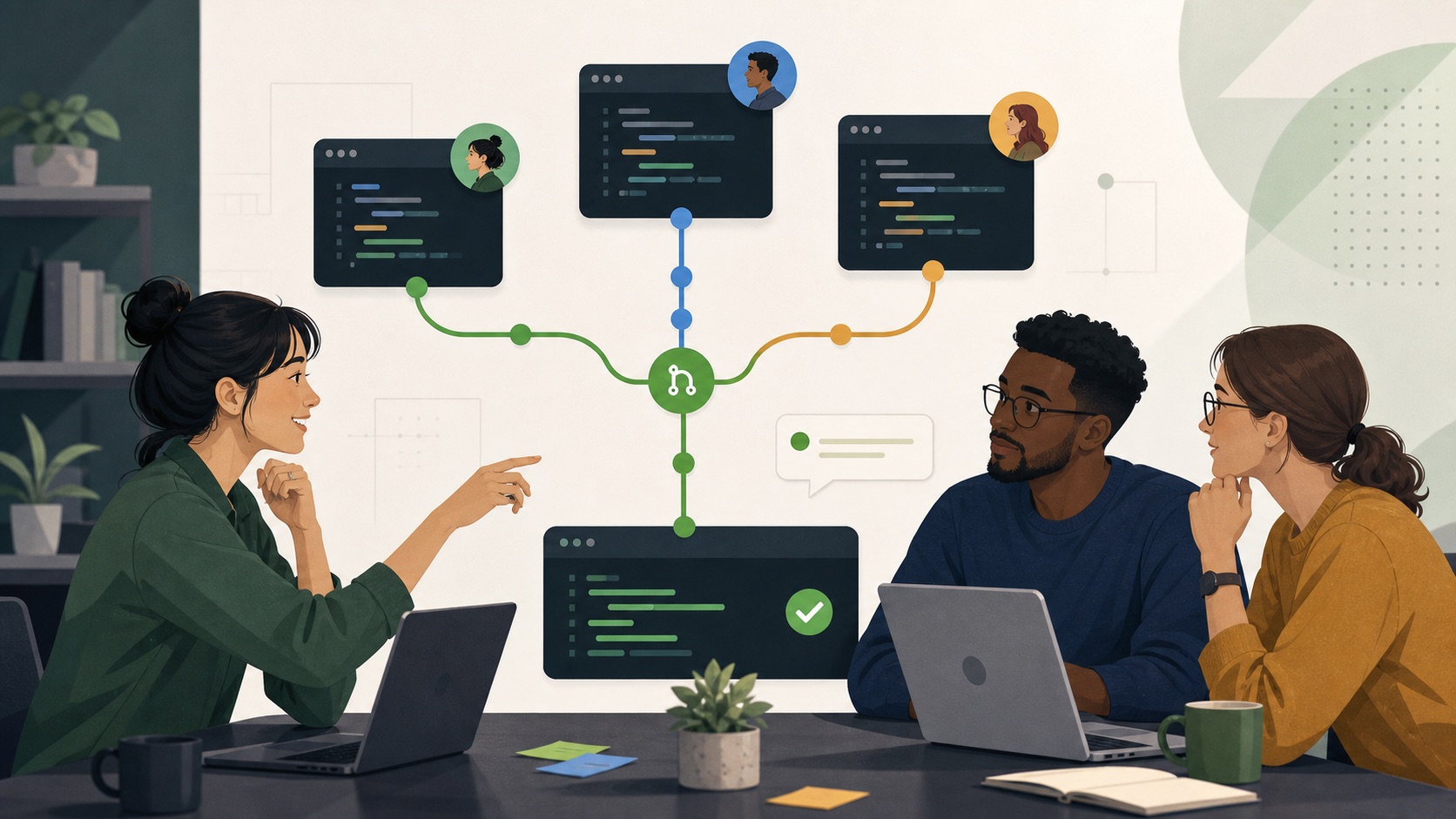
An open-source contribution can show that you can read unfamiliar code, follow a project’s rules, respond to review, and finish a small change. That is useful evidence for an early-career developer.
It is not a substitute for a job, and a merged pull request is not guaranteed. Maintainers are often volunteers, priorities change, and a technically correct patch may still be the wrong direction for the project. Go in to help and learn, not to collect a badge for your resume.
Start with project health, not star count
Before choosing an issue, spend ten minutes checking the repository:
- Was code merged recently?
- Do maintainers respond to issues and pull requests?
- Is there a current contribution guide?
- Can you build the project with the documented setup?
- Does the licence permit the kind of use you have in mind?
- Are newcomer labels actually active, or are those issues years old?
A popular repository with 400 waiting pull requests may be a worse first project than a smaller app whose maintainers answer questions.
Projects worth checking today
These repositories currently publish contribution information, but that does not mean any random feature will be accepted. Read the linked guidance before coding.
Thunderbird for Android
Thunderbird for Android explicitly welcomes contributions and points newcomers toward development, translation, and community channels. It has Kotlin and Java, clear architecture records, and a long product history. That makes it good for learning, though the initial build is not tiny.
Mihon
Mihon says pull requests are welcome and asks contributors to discuss major changes first. It is a useful option if you are interested in Compose, image-heavy interfaces, downloads, backups, or local data. Do not follow old advice that sends you to Tachiyomi as if the original project were still active.
NewPipe
NewPipe’s contribution guide covers setup, issue reporting, translation, and code changes. The project is in a significant refactor, so confirm which branch accepts the kind of change you want to make. A bug fix for maintained code and a feature for the refactor may follow different paths.
Signal Android
Signal Android recommends that new contributors begin with a simple existing bug and asks people to discuss larger features first. It is a complex, security-sensitive app. That can make a small, well-scoped fix valuable, but it is not the easiest repository for learning basic Android architecture from scratch.
Official Android samples
Now in Android and the Compose samples accept pull requests, but their open issue lists can be small and tightly curated. They are excellent to read. Treat a contribution opportunity as a bonus, not a promise that there will always be a beginner task waiting.
A first contribution does not need to be Kotlin
Useful work can include:
- Reproducing a bug and improving the report with exact steps and logs.
- Fixing an inaccurate setup instruction.
- Adding a regression test for a confirmed bug.
- Improving accessibility labels or keyboard behaviour.
- Updating translations through the project’s chosen platform.
- Testing a pending pull request and reporting what happened.
Do not submit cosmetic churn just to create activity. Renaming files, reformatting unrelated code, or generating documentation nobody requested creates review work without solving a problem.
Before you write code
Build the project unchanged and run the relevant tests. If that fails, stop and work out whether your environment or the documentation is wrong. A pull request is much harder to trust when the contributor never ran the original app.
For anything larger than an obvious typo or one-line fix, comment on the issue:
I reproduced this on version X. I think the failure happens in Y because Z. I would like to add a regression test and change only this path. Does that scope fit the project?
That message is useful because it contains evidence and a plan. “Can I work on this?” gives a maintainer very little to respond to.
Make the pull request easy to review
A solid description covers four things:
- The behaviour before the change.
- The behaviour after the change.
- Why this approach fits the existing code.
- How you tested it, including device or emulator details when relevant.
Attach screenshots or a short recording for UI changes. Keep unrelated cleanup out of the patch. If review feedback arrives, respond to the point rather than defending the first version out of pride.
Then wait. A week without review is normal in many volunteer projects. Follow the project’s etiquette before nudging, and be willing to close the work if the project has moved in another direction.
One careful contribution teaches more than five speculative pull requests. The skill you are building is not merely writing code. It is joining an existing conversation without making everybody else’s job harder.
Discussion
Comments are powered by GitHub Discussions. Sign in with GitHub to join in.